
I write historical novels both for children and adults and a major part of my writing process is research. Possibly, I spend more time rummaging in archives than I do in the here and now, and I was curious to know how long people have been celebrating Mother’s Day. So I opened my laptop and spent a pleasant few hours researching this celebration.
The Anglican church celebrates Mother’s Day or Mothering Sunday on the fourth Sunday after Lent. This year it will fall on the 19th of March. So don’t forget! https://www.churchofengland.org/news-and-media/stories-and-features/mothering-sunday-what-are-its-origins-church
Have you ever wondered why the date changes every year? They change because Easter follows the lunar (moon) calendar and falls on the first Sunday after the first full moon after the spring equinox. That’s a mouthful. When the sun is directly over the equator, March and September, it’s the equinox. The first day of Lent is Ash Wednesday and begins 46 days prior to that date.
However, other cultures also celebrate Mother’s Day which are not defined by the lunar calendar.


But let’s start in the United Kingdom. From the 16th Century, the church felt it important for people to return to their mother home church in the middle of Lent. This day, children, mainly daughters who worked away from home as domestic servants, were given a day off to visit their family. On their way home, they picked wild flowers to give to their mother. Which is why it’s traditional to give a gift of flowers. The church also designated Mothering Sunday as Refreshment Sunday and relaxed the rules of Lent, so families getting together could feast.
Next, not so far back.
The USA. Anna Jarvis created Mother’s day in 1908, and it became an official holiday in 1914. https://www.history.com/topics/holidays/mothers-day Though, she spent the rest of her life trying to take it out of the official holiday calendar, because this celebration became over comercialised.
Further back.
I discovered the ancient Greeks also venerated mothers in the form of the goddess Rhea. She was the mother of the Gods and the Greeks honoured her at the spring festival every year.
However, later, the Greek Orthodox church celebrated mothers in their feast of Ypapanti (2nd February) But, in the 1960s people began honouring mothers on the 2nd May together with many other countries in Europe. https://greekreporter.com/2022/05/08/mothers-day-ancient-greece/
The ancient Romans honoured Cybele at their annual spring festival, Hilaria, which became popular two hundred and fifty years before Christ.
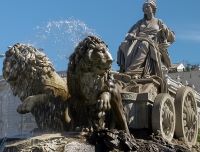
Even further back.
The ancient Egyptians honoured Isis, one of the most popular goddesses. She represented the ideal mother and was also the patroness of nature and magic. By the new kingdom, some statues show Isis feeding her son Horus, whereas in the old kingdom they depicted her with either an empty throne or a sun between horns. Depicting her as the power behind the throne. https://www.worldhistory.org/isis/
Although these are snippets of Mother’s Day, delving into the history, I realised, throughout many cultures regarded mothers as the source of life, nurturer, healer, and even one culture where they believed she could bring back others from the grave. I also believe there’s a mother instinct in everyone no matter what our gender, so honour it.
Every year my mum receives cards and flowers on Mother’s Day, so I’m off to write out her card and order some flowers. Because we’re not allowed to pick wild flowers from the hedgerow, which is understandable, but a shame.
The Bronze Age, a period I researched for my Amalie series, believed in an afterlife as they buried their people with weapons, tools and funeral rites. However, I haven’t found any connection to celebrations for mothers, but, recent finds and revisiting excisting finds archeologists discovered that not only were women leaders but high status warriors who planned and possibly led battles. Therefore, I believe women and men status’ were equal.
Book One of The Bronze Age Series, Amalie’s Perilous journey, takes you on a exciting ride across the wilds of the Bronze Age on her pony, Roble. In book two, Amalie and the Slavers, she, Roble and her friends battle slavers and encounter the kindness of strangers in a decimated village, the result of tribal wars. https://www.amazon.com/dp/B08JKDXYK2 or UK https://www.amazon.co.uk/dp/B08JKDXYK2

 Jacqueline P Vincent
Leave a comment